On this episode of ‘WATTS with the Grid? we hear from women in the private sector who have invested or attempted to invest in the global energy space. They address the sector’s opportunities and challenges through an investor lens and also explore Nigeria’s current Power sector landscape from that perspective.
Year: 2024
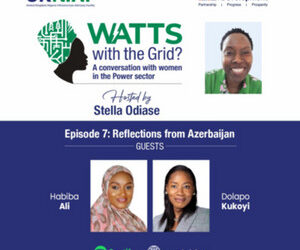
“WATTS with the Grid?” Episode 7: Reflections from Azerbaijan
On this episode of WATTS with the Grid, we are joined by Dolapo Kukoyi (Managing Partner, Detail Solicitors) and Habiba Ali (Managing Director/CEO, Sosai Renewable Energies Company). Fresh from COP 29 in Azerbaijan, they share their perspectives on key discussions that featured at the event, such as climate finance, energy access, and the importance of positioning Nigeria to leverage global opportunities.
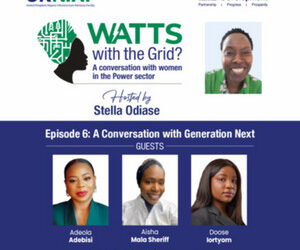
“WATTS with the Grid?” Episode 6: Conversation with Generation Next
In this special episode, we feature a group of young women in the Power sector. Chartered Accountant and Portfolio Manager at UKNIAF, Adeola Adebisi; Electrical Engineer and Project Manager at UKNIAF, Aisha Mala Sheriff; Energy Policy Research Analyst at Nextier, Doose Iortyom reflect on their experiences and share insights on critical issues shaping the sector, including valuable advice they would offer to their younger selves.
The Power Shift: UKNIAF’s lessons from Nigeria’s Integrated Resource Plan process
As UKNIAF we learned several lessons helping to develop the National Integrated Resource Plan which will guide the future of Nigeria’s power sector.
Economic & bottom tier prospects in Nigeria’s 2023 Electricity Act: What’s your appetite?
The 2022 Constitutional Amendment expands the power of Nigeria’s 36 States to generate, transmit and distribute on-grid electricity. Before this amendment, State governments’ powers were mostly limited to off-grid electricity supply.
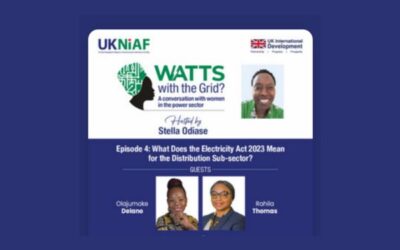
“WATTS with the Grid?” Episode 4: What does the Electricity Act 2023 mean for the distribution sub-sector?
In this episode female executives in Nigeria’s Power sector examine Nigeria’s Electricity Act 2023 and its implications for the distribution sub-sector. With the repeal of the 2005 reform act, the new legislation grants states, private investors, and individuals the power to generate, transmit, and distribute electricity. This conversation explores what this means for the 11 distribution companies (DisCos) currently serving Nigeria’s 36 states and the Federal Capital Territory.
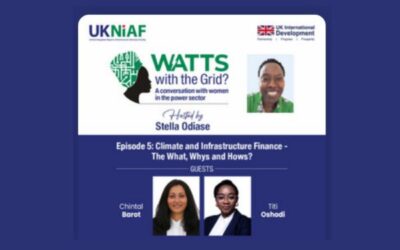
“WATTS with the Grid?” Episode 5: Climate and Infrastructure Finance: The What, Whys and Hows – Part II
How can Nigeria bridge the climate finance gap to meet its ambitious targets? Our guests, Chintal Barot (Founder, Co-Sustain Consulting) and Titilayo Oshodi (Special Adviser on Climate Change and Circular Economy to the Governor of Lagos State), share insights on accessing funding, the role of gender in climate finance and why the economic argument is crucial for driving climate action.
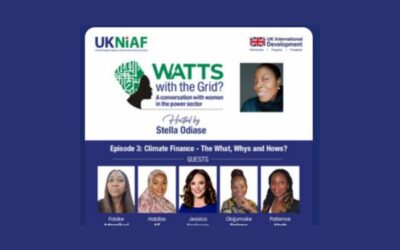
“WATTS with the Grid?” Episode 3: Climate Finance: The What, Whys and Hows.
Despite Nigeria investing an estimated USD 1.9 billion annually in climate-related activities, this is just 11% of the USD 17.7 billion needed to meet its emissions reduction goals by 2030. In this episode, we ask the critical questions: What’s driving these disparities? How can they be addressed? And what are the emerging opportunities, especially in light of the new Electricity Act 2023, which opens doors for renewable energy development across all 36 states?
Climate Finance funds development priorities Mp3
Climate finance isn’t just about funding green initiatives—it’s about shaping development priorities that align with sustainable growth.
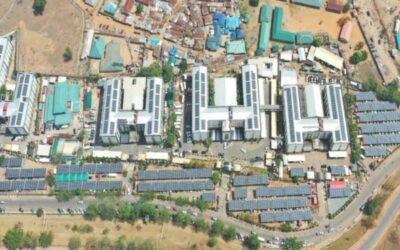
Microgrids, Interconnectivity, & Grid Stability
UKNIAF worked on a project that trialled integrating a solar microgrid with Nigeria’s national grid. The aim was to develop a replicable model for future microgrid interconnections.
Shifting Gears in a time of multiple transitions
Power sector transitions and the flexible advisory approach.
What is Climate Finance? MP3
Climate Finance explained in 3 simple sentences…
How is Climate Finance delivered?
From concessional loans and green bonds to innovative tools like debt swaps and climate-linked insurance, these financial instruments are key to driving impactful climate action.
Eyo Ekpo speaks on the National Integrated Electricity Policy
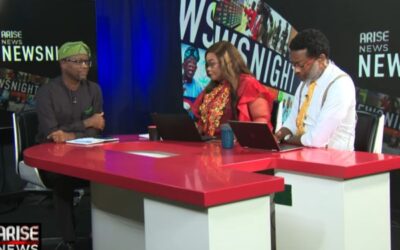
Eyo Ekpo, UKNIAF’s Power Sector Team lead speaks with Arise News on the significance of the National Integrated Electricity Policy on the day of its handover on August 28, 2024.
What you need to know about Climate Finance 2
Understanding Climate Finance with UKNIAF…
What you need to know about Climate Finance 1
Understanding Climate Finance with UKNIAF…
What is Climate Finance?
Understanding Climate Finance with UKNIAF…
Climate Finance in Nigeria: An introduction
This brief is a primer on climate finance – it aims to help readers navigate the climate finance landscape and quickly focus on the aspects that are most relevant to Nigeria.
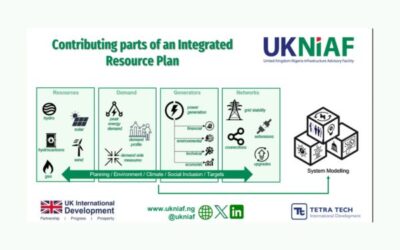
Contributing parts of an Integrated Resource Plan
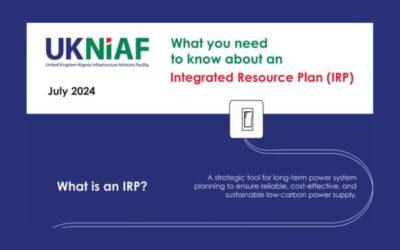
What is an Integrated Resource Plan?
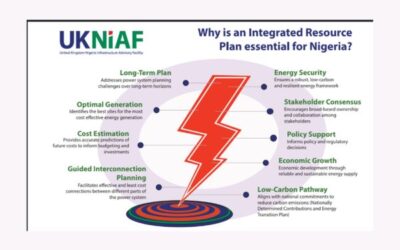
Why is an Integrated Resource Plan essential for Nigeria?
Seven ways to access Climate Finance
Here’s 7 ways in which Climate Finance can be accessed.
Climate Finance Funds development priorities
Infrastructure needs can be aligned with climate change to enhance energy security, improve agriculture and promote urbanisation.
What you need to know about Climate Finance
Here in a nutshell is what you need to know about Climate Finance.
Roundtable for State Access to Climate Finance- Key Learnings
Furera Isma Jumare, Director General, Jigawa State Investment Promotion Agency, shares key learnings from the ‘Roundtable for State Access to Climate Finance’.
Roundtable for State Access to Climate Finance- Expected Outcomes
Engr. Frank Edozie, Team Lead, UKNIAF, emphasizes focusing on development projects that benefit the climate. Frank advises- “Don’t do climate. Do development projects that have an impact on the climate.”
It’s a big shift in perspective. By prioritizing sustainable development, we can create projects that not only drive progress but also positively impact the environment.
Roundtable for State Access to Climate Finance- Key takeaways
Adaze Aguele Kalu, Hon. Commissioner, Finance, Budgeting and Planning, Edo State, shares key takeaways from the ‘Roundtable for State Access to Climate Finance’.
Roundtable for State Access to Climate Finance – Key takeaways
Dapo Oduwole, DG/CEO, Office of Public Private Partnerships, Ogun State shares his key takeaways from the Roundtable.
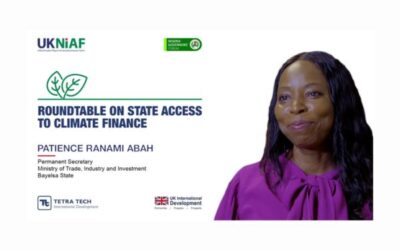
Roundtable for State Access to Climate Finance – Key takeaways
Patience Ranami Abah, Permanent Secretary, Ministry of Trade and Investment, Bayelsa state represented her state at the Roundtable. Here, she shares her key takeaways from the event.

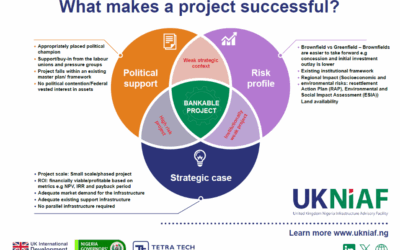
Project Bankability Framework
What makes a project successful?
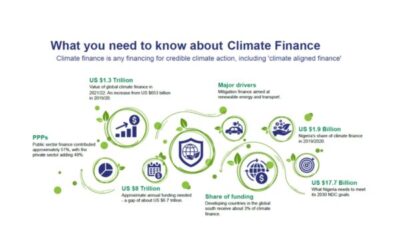
What you need to know about Climate Finance
Climate finance is any financing for credible climate action, including ‘climate aligned finance’.
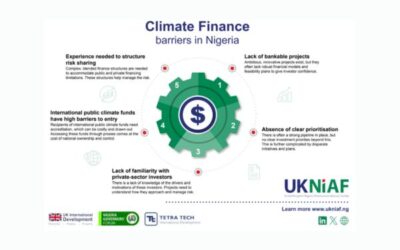
Climate Finance barriers in Nigeria
What are the hurdles to Climate Finance access in Nigeria?
Customer feedback at the NERC Consultative Forum
The consultative forum was organized by The Nigerian Electricity Regulatory Commission (NERC) and supported by UKNIAF. It is part of UKNIAF’s support to the Women on the Grid Hub (WotGH).
The forum aimed to provide a platform for electricity customers to share their experiences with electricity access and discuss related problems. The goal was to resolve customer problems either on the spot or at the very least to begin the resolution processes…
NERC Consultative Forum in Lugbe
The consultative forum was organized by Nigerian Electricity Regulatory Commission (NERC) and supported by UKNIAF. It is part of UKNIAF’s support to the Women on the Grid Hub (WotGH).
Charting a sustainable future through the national electricity policy dialogue
As Nigeria stands at a pivotal juncture in its energy sector reform, the National Policy Dialogue on Electricity is more than just a series of meetings; it represents a forward-thinking approach to resolving longstanding challenges.
From Policy Dialogues to Policymaker Coalitions
By Stella Odiase and Khadijat Baba-Muhammad
From Policy to Practice: Building the Future of Nigeria’s Energy Sector
The journey towards a decentralised electricity market in Nigeria is a vivid example of how legal frameworks can lead to substantial institutional and societal changes when coupled with effective policymaker coalitions.
A toolkit for establishing State Electricity Markets under the Electricity Act 2023
This “Toolkit for Establishing State Electricity Markets.” offers valuable insights and step-by-step strategies tailored to help stakeholders navigate the complexities of the Electricity Act 2023.
Electricity tariffs: a 3-way conversation #3
In this third and final instalment of a three-part series Stella Odiase, UKNIAF’s Cross Cutting Adviser and a Doctoral candidate at the Institute of Development Studies, Sussex University, reflects on a recent electricity customer interaction, where customer requests were quite straightforward.
Electricity tariffs: a 3-way conversation #2
In this second instalment of a three-part series Dr. Dalia Sakr, a UNFCCC accredited climate change expert, compares electricity and calorie consumption, pointing out that sometimes responsible behaviour takes discipline.
Electricity tariffs: a 3-way conversation #1
In this first of a three-part series Jumoke Delano, a multi-jurisdictional lawyer, and former Head of Regulatory Relations at the Abuja Electric Distribution Company, explores the interconnected roles of different players within the power value chain, and their need for cooperation and coordination.
Electricity tariffs: A three-way conversation
Three Perspectives on Nigeria’s Electricity Tariff Review:
the Utilities, the Climate Change Expert, and the Customer
Women on the Grid Hub
UKNIAF works to inspire women managers within the Nigerian power sector through the ‘Women on the Grid Hub. Eight trail-blazing women are helping us start this journey.
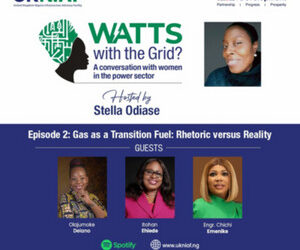
“WATTS with the Grid?” Episode 2: Gas as a transition fuel: rhetoric versus reality
While electricity in Nigeria is generated through thermal and hydropower, fossil fuels are the main source of electricity generation. Nigeria plans to increase international exports and domestic consumption and at the same time meet emissions and sustainable development goals. Can these two objectives be achieved at the same time? What could be the risks?
Olajumoke Delano, Chi Chi Emenike and Itohan Ehiede discuss these questions with Stella Odiase.
Challenges to the Nigerian power grid
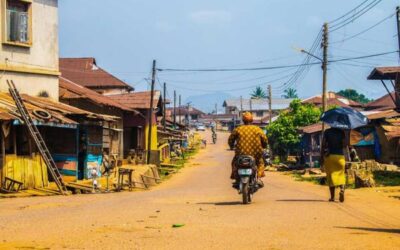
What factors contribute to the myriad of challenges facing the Nigerian power grid?
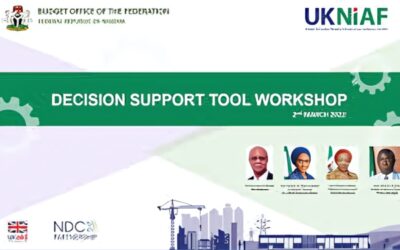
UKNIAF’s Decision Support Tool (DST)
We developed a DST to assist the Federal Government of Nigeria efficiently identify and prioritise key infrastructure projects.
What you need to know about A Regional Electricity Market
Regional electricity markets promote inter-state electricity trade, encouraging power security and economic growth.
“WATTS with the Grid?” Episode 1: Electricity pricing, billing and everything in between
“WATTS with the Grid?” is a conversation with women who work in the power sector.
What do these women think about the current national conversation on tariff increases? How is the Service Based Tariff faring in terms of improvement in service and revenues? How does the price of electricity impact national commitments to a low-carbon transition?
Stella Odiase leads the conversation with Dalia Sakr, Wola Joseph-Condotti, Tosin Adefeko and Olajumoke Delano.
What you need to know about Nigeria’s Energy Transition Plan
In 2021, Nigeria’s Energy Transition Plan was created with COP26 support, prompting Nigeria’s net-zero commitment by 2060.
Climate change and power infrastructure
How does the changing climate affect electricity infrastructure?
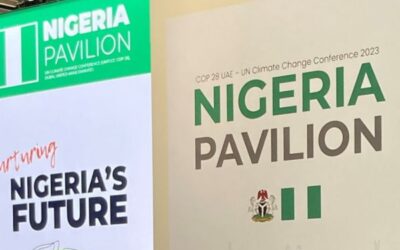
Nigeria and UKNIAF at COP28
For UKNIAF and its stakeholders, the way forward involves not just acknowledging Nigeria’s commitments at COP28 and the challenges in its path to achieving these, but actively engaging in appropriate solutions that deliver both national priorities and climate outcomes.